
Is Upright MRI Safe for Patients with Metal Implants or Medical Devices?
One of the most common questions patients ask before an MRI is whether the exam is safe if they have metal in their body. Joint replacements, surgical hardware, pacemakers, and other implanted medical devices are increasingly common, which means MRI safety questions come up every day.
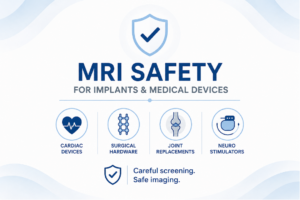
For patients considering an upright MRI, the concern is understandable. MRI technology uses powerful magnetic fields, so certain types of metal implants or devices require careful review before imaging can be performed.
The good news is that many patients with medical implants can still safely undergo MRI exams, but the answer depends on the specific type of implant, device, and imaging situation.
Why MRI Safety Matters
MRI does not use radiation like X-rays or CT scans. Instead, it uses magnetic fields and radio waves to create detailed images of the body.
Because magnets are involved, certain metals and electronic devices may react differently inside the MRI environment. Some implants are considered safe for MRI, while others require special precautions or may not be compatible.
This is why MRI safety screening is such an important part of the imaging process.
What Types of Implants or Devices May Affect MRI?
Many types of implants or medical devices may need to be reviewed before an MRI exam, including:
- Joint replacements
- Surgical screws or plates
- Spinal hardware
- Pacemakers
- Cochlear implants
- Neurostimulators
- Aneurysm clips
- Medication pumps
Even certain older surgical materials or metal fragments may require evaluation.
The presence of metal does not automatically mean a patient cannot have an MRI, but it does mean the imaging team needs accurate information beforehand.
Are All Metal Implants Unsafe?
No. In fact, many modern implants are specifically designed to be MRI-compatible or MRI-conditional.
For example, many orthopedic implants such as:
- Knee replacements
- Hip replacements
- Surgical screws
- Plates and rods
can often be safely scanned under appropriate conditions.
However, every device is different. MRI safety depends on factors such as:
- The type of metal used
- When the implant was placed
- The device manufacturer
- The MRI system being used
That’s why patients are typically asked detailed questions before scheduling or completing the exam.
What About Pacemakers and Electronic Devices?
Pacemakers and implanted electronic devices require especially careful review. Some newer pacemakers are designed for MRI use under specific conditions, while older models may not be compatible. Similar considerations apply to devices such as:
- Defibrillators
- Neurostimulators
- Implanted pumps
If a patient has one of these devices, the imaging center may need documentation from the manufacturer or coordinating physician before proceeding.
Does Upright MRI Change Safety Requirements?
An Upright MRI still uses magnetic technology, so MRI safety rules remain important. Patients with implants or devices still undergo the same careful screening process.
However, Upright MRI may offer additional comfort advantages for some patients, especially those who:
- Have difficulty lying flat
- Experience claustrophobia
- Need imaging in a seated or standing position
The more open design can help some patients feel less confined during the exam.
Why Full Disclosure Is Important
Sometimes patients are unsure whether a prior surgery or implant matters for MRI. The safest approach is to mention anything that could possibly involve metal or an implanted device, even if it seems minor or was placed many years ago.
Providing complete information helps the imaging team:
- Determine MRI compatibility
- Adjust imaging protocols if needed
- Ensure the exam is performed safely
When necessary, additional records may be reviewed before the scan.
What to Expect Before Your MRI
Before an Upright MRI, patients complete a detailed screening questionnaire about medical history, surgeries, implants, and prior procedures.
In some cases, the imaging team may request:
- Implant cards
- Surgical records
- Manufacturer information
- Additional physician clearance
These precautions are routine and designed entirely with patient safety in mind.
Upright MRI in East Brunswick, NJ
At ImageCare Radiology, patients seeking an upright MRI in East Brunswick, NJ, undergo thorough MRI safety screening before imaging begins. The imaging team carefully reviews implants, devices, and medical history to help ensure exams are performed safely and appropriately.
Radiologists and technologists work closely with referring providers when additional information or clearance is needed.
Safety Always Comes First
Having a metal implant or medical device does not automatically prevent someone from having an MRI. In many cases, imaging can still be performed safely with the proper precautions and careful evaluation.
The most important step is open communication with your healthcare provider and imaging team. With accurate information and proper screening, patients can move forward with greater confidence, knowing safety remains the top priority throughout the process.