
How CT Scans Help Doctors Diagnose Medical Conditions Faster
When patients are experiencing concerning symptoms, waiting for answers can be one of the most difficult parts of the healthcare journey. Physicians often need detailed information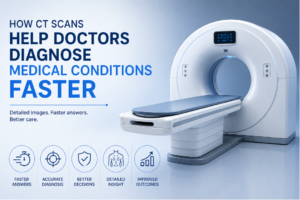 about what is happening inside the body before they can recommend treatment, order additional testing, or make a diagnosis.
That’s where CT imaging plays an important role. A CT scan provides detailed views of internal structures quickly and efficiently, helping physicians gather valuable diagnostic information that may not be available through a physical exam or standard X-ray alone.
While no imaging test can diagnose every condition by itself, CT scans often help accelerate the diagnostic process by providing physicians with clear, detailed images that support timely medical decision-making.
What Is a CT Scan?
A CT (computed tomography) scan combines X-ray technology with advanced computer processing to create detailed cross-sectional images of the body.
Unlike a traditional X-ray, which produces a single image, a CT scan captures multiple images from different angles. A computer then reconstructs those images into highly detailed views of bones, organs, blood vessels, and soft tissues.
This ability to visualize structures layer by layer allows physicians to see details that may otherwise be difficult to evaluate
Why Speed Matters in Diagnosis
Many medical conditions share similar symptoms.
For example, abdominal pain, chest discomfort, headaches, and shortness of breath can each have a wide range of possible causes. Physicians often need additional information before determining the most appropriate next steps.
The sooner healthcare providers can gather reliable diagnostic information, the sooner they can:
- Narrow potential causes
- Recommend additional testing when needed
- Develop treatment plans
- Refer patients to specialists
- Monitor medical conditions appropriately
CT imaging helps support this process by delivering detailed information in a relatively short amount of time.
Detailed Images Available Quickly
One reason CT scans are so widely used is their ability to produce highly detailed images rapidly.
Modern CT technology can capture numerous images within seconds, allowing physicians to evaluate internal structures without lengthy imaging sessions.
This combination of speed and detail makes CT imaging particularly valuable when physicians need answers quickly.
Evaluating Injuries Efficiently
After an accident or injury, physicians often need to assess the extent of damage as soon as possible. CT scans may help evaluate:
- Bone injuries
- Certain internal injuries
- Complex fractures
- Areas affected by trauma
Because CT imaging provides detailed cross-sectional views, it can offer information that helps physicians better understand the nature of an injury and determine appropriate care.
Investigating Unexplained Symptoms
Persistent or unexplained symptoms are another common reason physicians recommend CT imaging. Depending on the clinical situation, CT scans may be used when evaluating:
- Ongoing abdominal pain
- Chronic headaches
- Unexplained swelling
- Persistent respiratory symptoms
- Certain neurological concerns
The goal is to obtain detailed images that may help identify possible causes or guide further evaluation.
Helping Physicians Evaluate Internal Organs
CT scans provide detailed views of many internal organs throughout the body. Depending on the area being examined, physicians may evaluate:
- The lungs
- The liver
- The kidneys
- The pancreas
- The intestines
- The spleen
- Other abdominal and pelvic structures
This broad diagnostic capability makes CT imaging useful in many medical specialties.
Supporting Cancer Evaluation and Monitoring
CT imaging is frequently used in oncology care. Depending on the patient’s circumstances, CT scans may help physicians:
- Investigate concerning findings
- Assess the extent of certain conditions
- Monitor treatment response
- Evaluate changes over time
- Support ongoing follow-up care
It’s important to remember that imaging findings are only one component of a comprehensive medical evaluation. Physicians consider imaging alongside clinical examinations, medical history, laboratory testing, and other diagnostic information.
Improving Communication Among Healthcare Providers
Modern CT systems allow images to be reviewed and shared electronically. This accessibility helps:
- Radiologists interpret studies efficiently
- Referring physicians review findings promptly
- Specialists collaborate on patient care
- Healthcare teams coordinate treatment decisions
Faster access to imaging results can help streamline the overall diagnostic process.
What Happens During a CT Scan?
Many patients are surprised by how quick and straightforward a CT scan can be. During the exam:
- You lie on a motorized table.
- The table moves through the CT scanner.
- Images are captured from multiple angles.
- You may be asked to hold your breath briefly during certain portions of the scan.
The procedure itself is painless, and many scans are completed within just a few minutes.
Does a Faster Diagnosis Mean Immediate Answers?
While CT imaging often helps accelerate diagnosis, it is important to understand that imaging is only one part of the medical evaluation process. After your scan:
- A radiologist reviews the images.
- A report is prepared.
- Findings are shared with your referring provider.
- Additional testing may be recommended if necessary.
The information obtained from CT imaging helps physicians make more informed decisions, but diagnosis and treatment planning often involve multiple pieces of clinical information.
CT Scan in Fair Lawn, NJ
At ImageCare Radiology, patients seeking a CT scan in Fair Lawn, NJ, have access to advanced imaging technology designed to provide detailed diagnostic images efficiently and accurately. Experienced radiologists carefully interpret every study, helping referring physicians obtain the information needed to support timely and informed patient care.
Turning Images Into Answers
CT scans have become one of the most valuable diagnostic tools in modern medicine because they combine speed, detail, and versatility. Whether evaluating injuries, investigating unexplained symptoms, or monitoring ongoing medical conditions, CT imaging helps physicians gather the information they need to make informed clinical decisions.
While every patient’s situation is unique, the detailed images provided by CT technology often help move the diagnostic process forward more efficiently, bringing patients and providers one step closer to answers.