
The caring team at Pink Breast Center provides bone density scans in Paterson, NJ, with a strong focus on patient comfort. While widely recognized for breast imaging services, Pink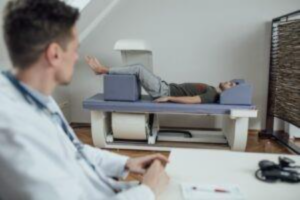 Breast Center also offers trusted diagnostic imaging that supports overall health, including bone density testing.
Our experienced radiologists prioritize clear communication, helping you feel informed and confident throughout your exam. Choosing a reliable imaging center is an important step, and our team is committed to delivering accurate results in a supportive environment.
What Is a DEXA Bone Density Scan?
A DEXA scan (Dual-Energy X-ray Absorptiometry) is the most widely accepted method for measuring bone mineral density. This specialized type of X-ray imaging evaluates bone strength and helps assess fracture risk.
DEXA scans are commonly used to:
- Support osteoporosis screening and diagnosis
- Measure bone density in areas prone to fractures, such as the hips and spine
- Detect bone loss early, before symptoms develop
- Establish a baseline for ongoing bone health monitoring
As a bone scan test, DEXA uses very low-dose radiation while providing precise, reliable measurements.
When Is a Bone Density Scan Recommended?
A bone density scan may be recommended based on age, health history, or specific risk factors. Common reasons include:
- Age over 65
Bone loss becomes more common with age, making routine screening an important preventive step. - Fragile bones or prior fractures
A bone mineral density test can help identify underlying bone weakness. - Osteoporosis management
For patients diagnosed with osteoporosis, follow-up scans help monitor bone health and evaluate treatment effectiveness.
Your healthcare provider can help determine whether bone density testing is appropriate for you.
What to Expect During Your Bone Density Scan
Bone density scans are non-invasive, painless, and straightforward. During your visit, you can expect:
- Minimal preparation
You may be asked to avoid calcium supplements on the day of your exam. - Comfortable imaging
You will lie on an examination table while images are captured, typically of the hips and spine. - Low radiation exposure
DEXA scans use very low-dose radiation and are considered safe for routine monitoring when recommended.
Most bone density scans are completed in less than 30 minutes, and patients can usually return to normal activities afterward.
Why Choose Pink Breast Center in Paterson?
Patients choose Pink Breast Center for:
- Experienced radiologists and attentive imaging staff
- A calm, supportive environment focused on patient comfort
- Advanced diagnostic services, including breast ultrasound and breast biopsy
- Clear explanations and transparent care
As part of the ImageCare Radiology network, Pink Breast Center combines trusted expertise with a patient-first approach.
Schedule a Bone Density Scan in Paterson, NJ
Your bone health is an important part of overall wellness. Contact Pink Breast Center to schedule your bone density scan and receive accurate diagnostic imaging in a caring, professional setting.
Frequently Asked Questions About Bone Density Scans in Paterson, NJ
What does a bone density scan measure?
It measures bone mineral density to help assess bone strength and fracture risk.
Is a DEXA scan different from a standard X-ray?
Yes. A DEXA scan is designed specifically to evaluate bone density, while standard X-rays are typically used to identify fractures.
Is the exam painful?
No. Bone density scans are painless and non-invasive.
How long does a bone density scan take?
Most bone density scans are completed in less than 30 minutes.
Can bone density scans help manage osteoporosis?
Yes. Repeat DEXA scans may be used to monitor bone changes and evaluate how well treatment is working over time.