
Can X-Rays Help Diagnose Lung or Chest Conditions?
When breathing issues, chest discomfort, or persistent coughs come up, doctors often turn to chest X-rays first. They’re quick, informative, and useful for spotting many conditions that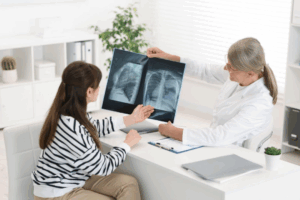 affect the lungs, heart, and surrounding structures. If your provider has ordered X-rays in Sparta, NJ, here’s what that test can reveal, and why it remains a trusted diagnostic tool.
What Chest X-Rays Can Show
Chest X-rays work by sending a small amount of ionizing radiation through the chest to create 2D images of the heart, lungs, ribs, and diaphragm. Providers can evaluate a wide range of conditions, including:
- Pneumonia (areas of inflammation or fluid)
- Lung infections
- Heart enlargement
- Fluid around the lungs (pleural effusion)
- Collapsed lung (pneumothorax)
- Rib fractures
- Abnormal masses or growths
Healthcare professionals often choose X-rays because they deliver fast, high-value information that helps guide next steps.
Why X-Rays Are Often the First Test Ordered
For lung and chest concerns, X-rays are typically the starting point due to their efficiency and clarity. A chest X-ray can help:
- Determine whether symptoms stem from infection, injury, or structural issues
- Reveal patterns that suggest chronic lung conditions
- Offer a baseline before more advanced imaging, like CT
- Help monitor whether treatment for an infection or lung disease is working
If your provider sees something that needs further investigation, they may recommend follow-up imaging.
When X-Rays May Not Be Enough
While X-rays are powerful, they don’t show everything. Some conditions require more detail than an X-ray can capture.
Your doctor may order additional testing if they need:
- High-resolution imaging of soft tissue
- Detailed views of complex lung abnormalities
- A closer look at blood vessels or airways
In those cases, CT scans or ultrasounds may supplement the X-ray findings. But the X-ray itself often points providers in the right direction.
What to Expect During a Chest X-Ray
The exam is simple and takes just a few minutes:
- You’ll stand or sit in front of the X-ray detector.
- A technologist positions you for front and side images.
- You may be asked to hold your breath briefly to reduce motion.
There’s no pain and no recovery time. You can return to your day right after.
X-Rays in Sparta, NJ: What This Means for You
If you’re scheduled for an X-ray, your provider is using one of the most reliable tools for identifying lung or chest concerns quickly. Chest X-rays support diagnoses such as infection, inflammation, fluid buildup, or injury, and help determine whether more advanced imaging is needed.
Understanding what these images can (and can’t) reveal makes the process less intimidating and gives you a clearer picture of your health.