
Understanding Digital X-Rays: Benefits Over Traditional Film Imaging
For decades, X-rays have been one of the most widely used tools in medical imaging. They help physicians evaluate bones, lungs, joints, and certain medical conditions quickly and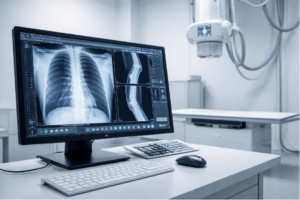 efficiently. While the basic concept of X-ray imaging has remained the same, the technology behind it has evolved significantly.
Today, many imaging centers, including ImageCare Radiology, use digital X-ray technology instead of traditional film-based imaging. If you’ve ever had an X-ray years ago and needed to hold a large sheet of film afterward, the experience today is quite different.
Understanding how digital X-rays work and why they are widely used in modern healthcare can help patients feel more confident about their imaging visit.
How Traditional Film X-Rays Worked
Traditional X-rays relied on photographic film to capture images. After the image was taken, the film had to go through a chemical development process similar to traditional photography.
This process involved several steps:
- Capturing the image on film
- Developing the film using chemicals in a darkroom
- Physically storing the films for future reference
While this method was effective for many years, it had limitations. Processing film took time, images could sometimes require retakes if exposure was not ideal, and storing physical films required significant space.
As medical imaging technology advanced, digital systems began to replace these older methods.
What Are Digital X-Rays?
Digital X-rays use electronic detectors instead of photographic film. When the X-ray image is captured, the detector immediately converts the information into a digital image that can be viewed on a computer screen.
This allows radiology teams to review the image almost instantly. Radiologists can then evaluate the images and share them securely with the referring physician.
Because digital images are stored electronically, they can also be accessed more easily when needed for follow-up care or comparison with previous studies.
Benefits of Digital X-Ray Technology
Digital imaging offers several advantages compared to traditional film-based X-rays. These improvements help support faster workflows, clearer images, and more efficient patient care.
Faster Image Availability
One of the most noticeable benefits of digital X-rays is speed. Images appear on the screen within seconds, allowing technologists to confirm that the image quality is appropriate before the patient leaves the exam room. This reduces the likelihood that patients would need to return for additional images due to film processing issues.
Improved Image Detail
Digital X-ray technology allows radiologists to adjust brightness, contrast, and zoom levels when reviewing images. These tools can help highlight subtle details that may be harder to evaluate on traditional film. Clearer visualization supports more precise interpretation and clinical decision-making.
Easier Image Storage and Sharing
Instead of storing physical film, digital images are stored securely in electronic systems. This allows healthcare providers to access imaging studies more easily when comparing current and previous exams. It also helps referring physicians receive results and images more efficiently.
More Efficient Patient Experience
Digital imaging can help streamline the imaging process. Because images are available immediately and do not require chemical processing, exams often move more quickly from image capture to interpretation. For patients, this often means a smoother visit and faster communication of results through their healthcare provider.
What to Expect During a Digital X-Ray
From a patient’s perspective, a digital X-ray feels very similar to a traditional one. The technologist will position you so the machine can capture images of the specific area your physician wants to evaluate.
During the exam you may be asked to:
- Stand, sit, or lie down depending on the body part being examined
- Hold still for a few seconds while the image is taken
- Change positions so multiple angles can be captured
The imaging itself is quick and noninvasive, and most exams take only a few minutes.
Digital X-Rays at ImageCare Radiology
ImageCare Radiology offers advanced digital X-rays in Vernon, NJ, providing high-quality imaging that helps physicians evaluate injuries and medical conditions efficiently.
Digital imaging technology supports clearer visualization, faster image review, and streamlined communication between radiologists and referring providers. These advantages help ensure that patients receive accurate imaging results that contribute to timely medical decisions.
The Evolution of X-Ray Imaging
Medical imaging continues to evolve as technology advances. Digital X-rays represent an important step forward from traditional film imaging, improving how images are captured, reviewed, and shared.
While the goal of X-ray imaging remains the same—to help physicians better understand what’s happening inside the body—modern digital systems allow that process to happen faster and with greater precision.
For patients, that means a simpler experience and access to imaging technology designed to support accurate, efficient care.