
What to Expect During Your First Mammogram Appointment
Scheduling your first mammogram is an important step in taking care of your health. It’s also completely normal to have questions about what the experience will be like. For many patients, the unknown is often the most stressful part. 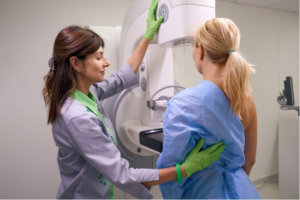
The good news is that a mammogram is a quick, routine imaging exam designed to support early detection of breast cancer. Knowing what to expect can help you feel more comfortable and prepared when the day of your appointment arrives.
Why Mammograms Are Important
Mammograms are used to screen for breast cancer, often before any symptoms are noticeable. Early detection can make a meaningful difference in treatment options and outcomes.
Your healthcare provider will recommend when to begin screening based on your age, personal history, and risk factors. Staying consistent with these screenings is one of the most effective ways to monitor breast health over time.
How to Prepare for Your Appointment
Preparing for a mammogram is simple, but a few small steps can help make the process smoother.
On the day of your exam:
- Avoid using deodorant, lotion, or powder under your arms or on your chest, as these can appear on images
- Wear a two-piece outfit so you can easily change from the waist up
- Bring any prior imaging records if you are visiting a new facility
If you have specific concerns, such as breast tenderness or scheduling around your menstrual cycle, your provider may offer additional guidance.
What Happens When You Arrive
When you arrive for your appointment, you’ll check in and complete any necessary paperwork. A technologist will then guide you to a private changing area, where you will be asked to remove clothing from the waist up and wear a gown.
The technologist performing your exam will explain each step and answer any questions you may have before the imaging begins.
What the Mammogram Feels Like
During the exam, each breast is positioned on a flat surface and gently compressed with a paddle. This compression is necessary to spread out the breast tissue and capture clear images.
You may feel pressure for a few seconds, but it typically passes quickly. Most patients describe the experience as uncomfortable rather than painful, and the compression only lasts long enough to take each image.
The technologist will take images from different angles to ensure a complete evaluation.
How Long Does the Appointment
The imaging portion of a mammogram usually takes only a few minutes. The entire appointment, including check-in and preparation, is typically completed within 30 minutes.
After the images are taken, you can return to your normal daily activities right away.
When You’ll Receive Results
After your exam, a radiologist will review the images and prepare a report for your healthcare provider. In many cases, results are shared within a few days.
If additional imaging is needed, it does not necessarily mean something is wrong. It simply means the radiologist would like a closer look at a specific area.
Tips for a More Comfortable Experience
If you’re feeling nervous about your first mammogram, you’re not alone. A few small adjustments can help make the experience more comfortable:
- Schedule your appointment when your breasts are less tender, if possible
- Communicate with the technologist about any discomfort during the exam
- Take slow, steady breaths to stay relaxed during positioning
Remember, the technologist’s goal is to make the process as smooth and comfortable as possible.
Mammogram Services in Vernon, NJ
If you are preparing for your first screening, ImageCare Radiology performs mammogram services in Vernon, NJ, to support your care in a comfortable and professional setting. Experienced technologists and radiologists work together to ensure high-quality imaging and a patient-focused experience.
Taking the First Step
Your first mammogram may feel like a big step, but it is a routine part of preventive care for many women. Understanding what to expect can make the experience feel more manageable and less intimidating.
In the end, it’s a short appointment that provides valuable insight into your health, and peace of mind that you are taking an important step toward early detection and long-term well-being.