
3D Mammography vs Traditional Mammograms: What’s the Difference?
Mammograms remain one of the most important tools for detecting breast cancer early. If you’ve scheduled a mammogram in Vernon, NJ, you may hear about two types of screening: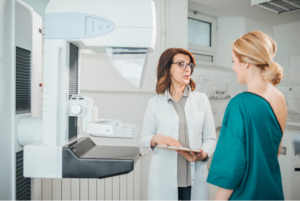 traditional mammography and 3D mammography, sometimes called breast tomosynthesis.
While both exams are designed to screen for breast cancer, the way the images are captured and reviewed is slightly different. Understanding how these imaging methods compare can help patients feel more confident when discussing screening options with their healthcare provider.
What Is a Traditional Mammogram?
Traditional mammography, often referred to as 2D mammography, has been used for many years as a standard screening tool for breast cancer. During the exam, low-dose X-rays capture images of the breast from different angles.
These images allow radiologists to evaluate breast tissue and look for signs such as:
- Unusual masses or lumps
- Calcifications (small calcium deposits)
- Changes in breast tissue structure
Traditional mammograms have played an important role in helping detect breast cancer early, often before symptoms appear.
What Is 3D Mammography?
3D mammography builds on the foundation of traditional mammography by capturing multiple images of the breast from different angles. These images are then reconstructed into thin layers that allow radiologists to view the breast tissue in greater detail.
Instead of seeing all the tissue in a single flat image, the radiologist can scroll through these layers—somewhat like flipping through pages of a book—to examine specific areas more closely.
This layered view can make it easier to evaluate overlapping tissue that might appear unclear on a traditional 2D image.
Key Differences Between 2D and 3D Mammography
Both imaging methods are effective tools for breast cancer screening, but there are a few important differences.
Image Detail
Traditional mammograms produce flat images of the breast, while 3D mammography creates a series of thin slices. This added perspective can help radiologists examine dense or overlapping tissue more carefully.
Breast Tissue Evaluation
In some cases, overlapping tissue in a 2D image can make interpretation more challenging. The layered view provided by 3D mammography may help clarify these areas during evaluation.
Screening Experience
For patients, the experience during the exam is very similar for both types of mammography. The breast is positioned and gently compressed between two plates to capture clear images.
The compression may feel uncomfortable for a few seconds, but it helps ensure the images are as accurate as possible.
Why Mammograms Matter
Regular mammography screening helps detect breast cancer at earlier stages, when treatment options may be more effective. Many breast cancers are found during routine screenings before symptoms are noticeable.
Healthcare providers recommend mammograms based on a person’s age, risk factors, and medical history. Discussing screening guidelines with your provider can help determine the best schedule for you.
What to Expect During Your Mammogram
If you are scheduled for a mammogram, the exam itself is typically quick. During your visit:
- A technologist will guide you through the positioning process
- The breast will be briefly compressed to capture clear images
- Images will be taken from multiple angles
The imaging process usually takes only a few minutes, though the entire appointment may take a little longer.
Mammogram Services in Vernon, NJ
If you are due for breast cancer screening, ImageCare Radiology provides mammography services to help support early detection and breast health. Experienced technologists and radiologists work together to ensure patients receive high-quality imaging in a supportive environment.
Choosing the Right Screening Approach
Both traditional and 3D mammography play valuable roles in breast cancer screening. The most important step is staying consistent with recommended screening schedules and discussing any questions with your healthcare provider.
Advances in imaging technology continue to improve how breast cancer is detected and evaluated. Whether through traditional mammography or 3D imaging, the goal remains the same: providing clear, reliable images that help support early detection and informed care decisions.
We now offer mammography in Sparta at our 376 Lafayette office. With ImageCare Radiology, comfort and convenience are always a priority.