
What Happens After a CT Scan? Understanding Results and Next Steps
For many patients, the CT scan itself is only part of the experience. Once the exam is complete, a new set of questions often arises: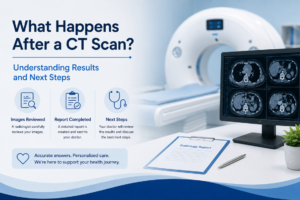
When will I get my results? Who reviews the images? What happens next?
These are common concerns, especially when imaging is being performed to investigate symptoms, monitor a medical condition, or help guide treatment decisions.
While every patient’s situation is unique, understanding the process that follows a CT scan can help reduce uncertainty and provide a clearer picture of what to expect.
What Happens Immediately After a CT Scan?
In most cases, patients can return to their normal activities shortly after a CT scan.
If contrast material was used during the exam, your healthcare provider may recommend drinking fluids afterward unless you have been given different instructions.
The imaging itself is complete once the scan is finished, but the process of reviewing and interpreting the images is just beginning.
Who Reviews CT Scan Images?
After your exam, the images are sent to a radiologist, a physician specially trained to interpret medical imaging studies. Radiologists evaluate the images carefully, looking for findings that may help explain symptoms or answer the clinical question that prompted the exam.
Depending on the reason for the CT scan, the radiologist may assess:
- Bones and joints
- Internal organs
- Blood vessels
- Soft tissues
- Signs of injury, infection, inflammation, or disease
The radiologist’s expertise helps transform the images into meaningful diagnostic information for your healthcare provider.
What Is a Radiology Report?
Once the images have been reviewed, the radiologist prepares a detailed report.
The report generally includes:
- A description of the area examined
- Relevant findings
- Observations related to the reason for the scan
- An impression or summary of the radiologist’s interpretation
This report is sent to the referring physician, who uses the information alongside your medical history, symptoms, physical examination findings, and any other testing that may have been performed.
How Long Does It Take to Get Results?
The timeline for receiving results can vary depending on several factors, including:
- The type of CT scan performed
- The urgency of the exam
- Your healthcare provider’s process for communicating results
Some results may be available relatively quickly, while others may take longer depending on the circumstances. If your provider has ordered the scan to evaluate an urgent issue, the review process may be expedited.
Patients should follow the instructions provided by their healthcare provider regarding when and how results will be communicated.
Why Your Doctor Reviews the Results With You
Many patients wonder why the imaging center does not immediately explain the findings. While radiologists interpret the images, your referring physician is typically the best person to discuss what those findings mean in the context of your overall health.
A CT scan provides valuable information, but it is only one piece of the larger clinical picture. Your physician can help explain:
- What the findings mean
- Whether additional testing is needed
- Possible treatment options
- Recommended follow-up care
This approach helps ensure that imaging results are interpreted alongside all other relevant medical information.
What Happens If the CT Scan Is Normal?
Many patients assume that a normal CT scan means their symptoms were imagined or unimportant. That is not necessarily the case.
A normal result may help your physician:
- Rule out certain conditions
- Narrow the list of possible causes
- Determine whether additional evaluation is needed
In many situations, a normal CT scan provides valuable reassurance and helps guide the next steps in diagnosis or treatment.
What Happens If Something Is Found?
If the CT scan identifies an abnormality, the next step depends on the specific findings. Possible follow-up recommendations may include:
- Additional imaging studies
- Laboratory testing
- Referral to a specialist
- Monitoring over time
- Treatment planning
Not every abnormal finding is serious, and many findings are unrelated to cancer or major disease. Your healthcare provider will explain any recommendations based on your individual situation.
Why Follow-Up Matters
Even when patients feel better after a CT scan, it is important to review results and complete any recommended follow-up care. Imaging findings may provide information that:
- Helps confirm a diagnosis
- Supports treatment decisions
- Monitors a known condition
- Identifies issues that require additional attention
Following through with recommended care helps ensure that important information is not overlooked.
CT Scan in West Orange, NJ
At ImageCare Radiology, patients seeking a CT scan in West Orange, NJ, have access to advanced imaging technology and experienced radiologists who provide detailed image interpretation to support accurate diagnoses and informed medical decision-making.
Understanding the Process Can Ease Anxiety
Waiting for imaging results can feel stressful, but understanding what happens after a CT scan can make the process feel more manageable.
From image review and report generation to physician consultation and follow-up planning, several important steps occur after the scan is completed. Each part of the process is designed to help healthcare providers gather accurate information and determine the most appropriate path forward.
For patients, knowing what to expect can bring greater confidence and peace of mind while awaiting answers.