
What Is a KUB X-Ray? Uses, Preparation, and Results
If your doctor has ordered a KUB X-ray, the name alone may leave you with questions. What does KUB mean? What are they looking for? Do you need to do anything before the exam?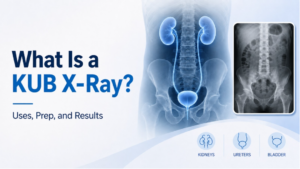
A KUB is a type of abdominal X-ray. The name comes from the three main areas it is commonly used to evaluate: the kidneys, ureters, and bladder.
It is a simple imaging exam that can give your healthcare provider a useful look at parts of the abdomen and urinary system.
What Does KUB Stand For?
KUB stands for:
- Kidneys
- Ureters
- Bladder
These structures are part of the urinary system.
A KUB X-ray can also capture other structures in the abdomen, including some bowel gas patterns and nearby bones.
Your doctor may order the exam when they need a quick, basic look at what is happening in the abdomen or urinary tract.
Why Might Your Doctor Order a KUB X-Ray?
A KUB can be used for several different reasons. Your provider may recommend one to help evaluate:
- Abdominal pain
- Certain urinary symptoms
- Possible kidney or urinary tract stones
- Bowel gas patterns
- Constipation or possible blockage
- The position of certain medical devices
The exact reason for the exam depends on your symptoms and what your healthcare provider is trying to understand.
A KUB is not the right test for every abdominal problem. In some cases, ultrasound, CT, or another imaging study may provide more detailed information.
What Can a KUB X-Ray Show?
A KUB is especially useful for showing differences in density inside the abdomen. The images may help reveal:
- Some kidney or urinary tract stones
- Bowel gas and stool patterns
- Certain signs of bowel obstruction
- Changes in the position of abdominal organs
- Some bone abnormalities
- The location of certain tubes or devices
Not every condition can be seen clearly on a standard X-ray. That is why your provider will consider the images together with your symptoms, exam findings, and any other testing.
Can a KUB Show Kidney Stones?
Sometimes.
Certain kidney stones can be seen on X-ray, while others may not be visible.
If your symptoms strongly suggest a kidney stone but the KUB does not provide enough information, your doctor may recommend another imaging test.
The important thing to know is that a normal KUB does not always rule out a urinary stone.
Do You Need to Prepare for a KUB X-Ray?
In many cases, very little preparation is needed. You may be asked to:
- Wear clothing without metal
- Remove jewelry or other metal objects
- Follow any instructions your imaging center provides
Some exams may have different requirements depending on why the X-ray was ordered. Because preparation can vary, it is always best to follow the directions you receive for your specific appointment.
If you are pregnant or think you may be pregnant, tell your healthcare provider or technologist before the exam.
What Happens During the Exam?
A KUB X-ray is usually straightforward.
A technologist will position you so the necessary images can be taken. You may be asked to lie on an X-ray table or stand, depending on the views your doctor requested.
You will need to stay still briefly while each image is taken. The X-ray itself does not hurt.
If you are already uncomfortable because of abdominal pain or urinary symptoms, tell the technologist. They can help you get into position as comfortably as possible.
How Long Does a KUB X-Ray Take?
The imaging itself is generally quick, but the total appointment time can vary depending on the views needed and the workflow at the imaging center.
Rather than focusing on an exact number of minutes, it is more helpful to think of a KUB as a relatively simple X-ray exam that does not usually require a lengthy imaging process.
Does a KUB X-Ray Use Radiation?
Yes. A KUB uses ionizing radiation to create images.
When your doctor recommends an X-ray, the expected benefit of getting useful diagnostic information is weighed against the radiation exposure.
The goal is to obtain the images needed to answer the clinical question without unnecessary exposure.
What Happens After the KUB?
Once the images are complete, a radiologist reviews them and prepares a report for your referring provider.
Your doctor will then consider the results along with your symptoms and other findings.
Depending on what the X-ray shows, the next step may involve treatment, follow-up, additional testing, or another type of imaging.
What If the KUB Does Not Explain Your Symptoms?
That can happen.
A KUB is useful for certain questions, but it does not show every abdominal or urinary condition clearly. If your symptoms continue or your doctor still needs more information, another test may be recommended.
That does not mean the KUB was unnecessary. It may still help rule out certain problems and guide the next step in your evaluation.
X-Rays in West Orange, NJ
If your healthcare provider recommends a KUB or another diagnostic X-ray, ImageCare Radiology offers X-rays in West Orange, NJ.
X-ray imaging can help your referring provider get a clearer look at certain structures inside the body and better understand what may be contributing to your symptoms.
Understanding the Test Can Make It Easier
A KUB X-ray may sound unfamiliar at first, but the exam itself is simple.
It gives your healthcare provider a useful look at the abdomen and urinary system and can help answer questions about pain, urinary concerns, bowel changes, or other symptoms.
Knowing what the test is for, what it can show, and what happens afterward can make the experience feel much more straightforward.