Osteoporosis Awareness Month: Why Bone Density Scans Matter
Bone health is easy to overlook, until it becomes a problem. During Osteoporosis Awareness and Prevention Month, the focus shifts to a condition that often develops quietly over time. Osteoporosis weakens bones, making them more fragile and more likely to fracture, sometimes from something as simple as a minor fall.
Because bone loss doesn’t usually cause symptoms early on, many people don’t realize there’s an issue until a fracture occurs. That’s why screening plays such an important role. A bone density scan (DEXA) offers a way to assess bone strength before problems arise, giving patients and providers a chance to take action early.
What Is Osteoporosis?
Osteoporosis is a condition that causes bones to become less dense and more brittle. Healthy bone is constantly being broken down and rebuilt, but as we age, this balance can shift. When bone loss outpaces bone formation, bones gradually weaken.
Common areas affected include:
- Hips
- Spine
- Wrists
Fractures in these areas can significantly impact mobility and quality of life, especially in older adults.
Why Early Detection Matters
One of the challenges with osteoporosis is that it develops silently. There are often no warning signs until a fracture occurs. By that point, bone loss may already be advanced.
Early detection allows for:
- Monitoring bone health over time
- Identifying individuals at higher risk for fractures
- Guiding lifestyle changes or medical treatment when needed
This is where a bone density scan becomes especially valuable.
What Is a Bone Density Scan (DEXA)?
A DEXA scan (dual-energy X-ray absorptiometry) is a specialized imaging test used to measure bone density. It is considered the standard method for evaluating bone strength and assessing the risk of osteoporosis.
The scan uses low-dose X-rays to measure how much mineral content is present in the bones, typically focusing on areas such as the hip and spine.
During the exam:
- You lie comfortably on a table
- A scanning arm passes over the body
- The test is quick, noninvasive, and painless
The results help physicians determine whether bone density is within a normal range or if there are signs of bone loss.
Who Should Consider a DEXA Scan?
A bone density scan may be recommended based on age, risk factors, and medical history. While screening guidelines vary, certain groups are more likely to benefit from evaluation.
Your doctor may suggest a DEXA scan if you:
- Are age 65 or older
- Are postmenopausal
- Have a family history of osteoporosis
- Have experienced a fracture from a minor injury
- Have conditions or take medications that affect bone health
Bone density testing is not limited to older adults. In some cases, younger individuals with risk factors may also benefit from screening.
How DEXA Supports Prevention
A DEXA scan does more than diagnose osteoporosis. It helps create a baseline for bone health and allows physicians to monitor changes over time.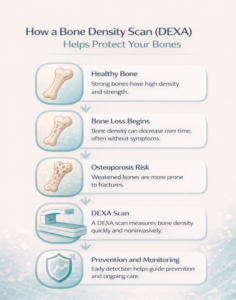
This information can guide decisions related to:
- Nutrition, including calcium and vitamin D intake
- Physical activity, particularly weight-bearing exercise
- Lifestyle adjustments
- Medical treatments when appropriate
With early insight, patients have more opportunities to take steps that support stronger bones.
What to Expect During the Exam
For most patients, a DEXA scan is one of the simplest imaging exams they will experience.
The process typically takes about 10 to 20 minutes. There is no need for injections or special preparation in most cases, and patients can return to normal activities right after the scan.
Because the test uses very low levels of radiation, it is considered safe for routine use when recommended by a healthcare provider.
A Simple Step Toward Stronger Bones
Osteoporosis Awareness and Prevention Month is a reminder that bone health deserves attention long before symptoms appear. A bone density scan offers a straightforward way to evaluate bone strength and identify potential concerns early.
For many patients, this small step provides valuable insight that can help reduce the risk of fractures and support long-term mobility.