Hepatitis Awareness Month: How FibroScan Helps Monitor Liver Health
Each May, Hepatitis Awareness Month brings attention to a group of liver conditions that often develop quietly, without obvious symptoms. Hepatitis—whether caused by a virus,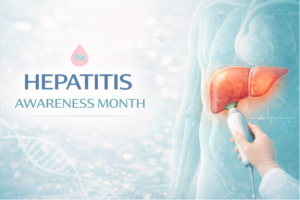 alcohol use, or other factors—can lead to inflammation and long-term liver damage if left undetected or unmanaged.
One of the challenges with liver disease is that it doesn’t always announce itself early. That’s why monitoring liver health over time is such an important part of care. Advances in medical imaging have made this process easier and more accessible, with tools like FibroScan offering a noninvasive way to assess liver health.
Understanding how FibroScan works and when it may be recommended can help patients take a more informed approach to their liver health.
Why Liver Health Matters
The liver plays a central role in the body, helping to process nutrients, filter toxins, and support overall metabolic function. When the liver becomes inflamed or damaged, these processes can be affected.
Conditions like hepatitis can lead to fibrosis, which is the buildup of scar tissue in the liver. Over time, fibrosis can progress and impact how well the liver functions.
Because early liver damage may not cause noticeable symptoms, routine evaluation and monitoring can help physicians identify changes before they become more serious.
What Is a FibroScan and How Does It Work?
A FibroScan is a specialized, noninvasive imaging test used to assess liver stiffness. Liver stiffness can be an indicator of fibrosis, or scarring, within the liver.
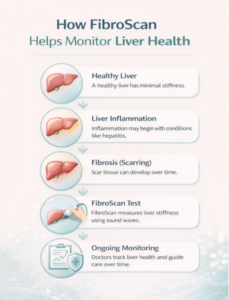
The test uses ultrasound-based technology to measure how quickly sound waves travel through the liver. Stiffer liver tissue, often associated with fibrosis, allows these waves to travel differently than healthy tissue.
During the exam:
- You lie comfortably on your back
- A small probe is placed against the skin over the liver area
- Gentle pulses are delivered to measure liver stiffness
- Results are generated without the need for incisions or sedation
The procedure is typically quick and painless, often taking only a few minutes to complete.
Why FibroScan Is Used in Hepatitis Care
For individuals with hepatitis, monitoring liver health is an ongoing process. FibroScan provides a way for physicians to track changes in liver stiffness over time without the need for more invasive procedures.
In the past, liver biopsy was often used to assess fibrosis. While biopsies are still used in certain cases, FibroScan offers a noninvasive alternative that can be repeated more easily when monitoring is needed.
FibroScan may help physicians:
- Evaluate the degree of liver fibrosis
- Monitor progression or improvement over time
- Support treatment planning and follow-up care
It’s important to note that FibroScan does not diagnose hepatitis itself, but it helps assess how the liver may be affected.
Who May Need a FibroScan?
A FibroScan may be recommended for individuals who have known or suspected liver conditions, or for those at increased risk of liver disease.
Your doctor may consider FibroScan if you:
- Have been diagnosed with hepatitis B or hepatitis C
- Have elevated liver enzyme levels
- Have fatty liver disease (NAFLD or NASH)
- Have a history of alcohol-related liver concerns
- Need monitoring of existing liver disease
Because the test is noninvasive, it may be used periodically to help track liver health over time.
What to Expect During the Exam
One of the advantages of FibroScan is how simple the process is for patients.
During your appointment:
- You will be positioned comfortably on an exam table
- The technologist will place the probe over the liver area
- You may feel a light tapping sensation as measurements are taken
- The test is completed quickly, often within 10–15 minutes
There is typically no downtime afterward, and patients can return to normal activities right away.
A Simpler Approach to Monitoring Liver Health
For many patients, the idea of evaluating liver health used to involve more invasive procedures. FibroScan has helped change that by offering a noninvasive, efficient way to assess liver stiffness.
While no single test tells the whole story, FibroScan provides valuable information that helps physicians better understand liver health and make informed decisions about care.
Raising Awareness During Hepatitis Awareness Month
Hepatitis Awareness Month is an opportunity to encourage screening, education, and proactive care. Many forms of hepatitis can be managed effectively when identified early, making awareness an important first step.
Tools like FibroScan support this effort by helping physicians monitor liver health in a way that is both accessible and patient-friendly.By staying informed and working with healthcare providers, patients can take meaningful steps toward protecting their liver health, often before symptoms ever appear.