Pediatric Sepsis Week: How Doctors Find the Source of Serious Infections in Children
Each year during the third week of April, Pediatric Sepsis Week raises awareness about a condition that requires immediate medical attention. Sepsis occurs when the body’s response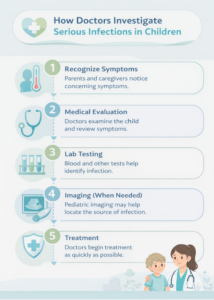 to an infection becomes overwhelming and begins to affect multiple organ systems. In children, this condition can develop quickly, which is why early recognition and prompt medical care are so important.
The priority in suspected sepsis is always rapid treatment. Doctors act quickly to stabilize the child and begin therapies such as fluids and antibiotics. At the same time, physicians work to determine where the infection started, because identifying the source helps guide the most effective treatment.
This is where a combination of medical evaluation, laboratory testing, and sometimes pediatric imaging may help physicians better understand what is happening inside the body.
Understanding Sepsis in Children
Sepsis begins with an infection somewhere in the body. In children, these infections can originate in several places, including:
- The lungs
- The urinary tract
- The abdomen
- The bloodstream
- Bones or joints
Not every infection leads to sepsis, but when the body’s immune response becomes dysregulated, inflammation can spread throughout the body and affect organs such as the heart, lungs, kidneys, or brain.
Because symptoms can progress quickly, medical teams focus first on stabilizing the child and treating the infection as soon as possible.
Why Identifying the Source of Infection Matters
While early treatment begins immediately, physicians also work to determine what infection triggered the body’s response. Knowing the location of the infection helps doctors choose the most appropriate medications and determine whether additional treatment may be needed.
For example, doctors may investigate whether the infection involves:
- Pneumonia in the lungs
- A urinary tract infection
- An abdominal infection
- An abscess or localized pocket of infection
- An infection affecting bones or joints
Finding the source helps guide treatment decisions and supports more targeted care.
How Pediatric Radiology Can Help Doctors Investigate Infections
Pediatric radiology focuses on imaging for infants, children, and adolescents. Imaging does not diagnose sepsis itself, but it may help physicians evaluate the body to locate infections that could be contributing to a child’s illness.
Depending on symptoms, doctors may use imaging to:
- Look for signs of pneumonia in the lungs
- Evaluate the abdomen for possible infection
- Identify fluid collections or abscesses
- Assess bones or joints if infection is suspected
These imaging studies help doctors gather additional information when they are investigating the cause of a serious infection.
Imaging Methods Used in Pediatric Radiology
Several imaging techniques may be used depending on the clinical situation.
X-rays
Chest X-rays are often used to evaluate lung infections such as pneumonia.
Ultrasound
Ultrasound can help physicians examine organs in the abdomen and detect fluid collections or abscesses. Because it uses sound waves rather than radiation, it is commonly used in pediatric care.
MRI (Magnetic Resonance Imaging)
MRI provides detailed images of soft tissues, bones, and joints and may be used in certain cases when doctors need a closer look at possible infections.
The choice of imaging always depends on the child’s symptoms and the physician’s clinical judgment.
Signs of Sepsis Parents Should Know
During Pediatric Sepsis Week, one of the most important messages is awareness. While these symptoms can occur in many illnesses, parents should seek medical attention immediately if a child shows signs such as:
- Fever or very low body temperature
- Rapid breathing or difficulty breathing
- Extreme sleepiness or difficulty waking
- Unusual irritability or confusion
- Pale, mottled, or bluish skin
- Poor feeding in infants
If a child appears seriously ill or symptoms worsen quickly, immediate medical evaluation is essential. Seek medical attention immediately, and if you suspect sepsis, let your medical team know.
Pediatric Radiology at ImageCare Radiology
At ImageCare Radiology, pediatric radiology services help physicians evaluate a wide range of conditions affecting infants, children, and adolescents. Imaging studies are carefully tailored for pediatric patients to support accurate diagnosis while prioritizing patient comfort and safety.
Radiologists work closely with referring providers to interpret imaging studies and provide insights that support clinical decision-making.
Raising Awareness During Pediatric Sepsis Week
Pediatric Sepsis Week is an important reminder that serious infections in children require prompt medical attention. Early recognition and treatment are the most critical steps in protecting a child’s health.
While imaging is only one part of the diagnostic process, pediatric radiology can sometimes help physicians locate infections and better understand how they are affecting the body.
By increasing awareness and supporting coordinated medical care, healthcare providers and families can work together to recognize serious infections early and ensure children receive the care they need.